Coat of Arms of Mexico Embroidery Review
As a designer who spends half my life staring at stitch charts and the other half troubleshooting tension issues on the sewing machine, I don’t just buy embroidery files; I stress-test them. I look for designs that translate well from screen to fabric, designs that hold up under the scrutiny of a customer’s first glance. Recently, I pulled the Coat of Arms of Mexico design into my workflow to see if it has the legs to be a staple in my commercial collection or if it belongs in a niche hobbyist’s drawer. Here is my honest breakdown of how this patriotic motif performs when you are trying to create something sellable.
First Impressions: Mood and Visual Weight
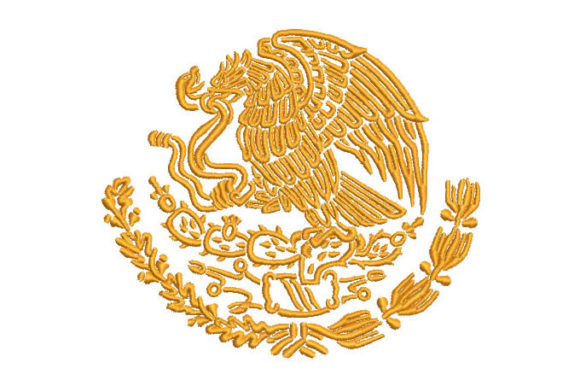
The moment you load the file, the visual personality of the Coat of Arms of Mexico jumps out. It is not a subtle design. It carries a heavy sense of tradition, authority, and heritage. For a designer, this is both a blessing and a challenge. The layout is dense with symbolism—the eagle, the cactus, the snake—elements that require precision to read correctly when stitched. In digital mockups, it looks crisp. But does it survive the needle?
The mood it creates is one of bold pride. It feels right for products that want to make a statement rather than whisper. When I visualize this on a product, I immediately think of high-visibility items. This isn’t a design for a delicate lace handkerchief. It demands space. It needs a solid background where its details can breathe. The visual weight suggests it works best as a central focal point, anchoring the composition of whatever garment or accessory it adorns.
Real-World Application: Where Does It Shine?
I took this embroidery file through a series of practical scenarios to see where it fits in the current market landscape. My goal was to determine which handmade product categories would yield the best return on investment in terms of effort versus aesthetic payoff.
- Custom Apparel and Sweatshirts: This is perhaps the strongest use case. Imagine a heavyweight cotton sweatshirt in cream or black. Placing the Coat of Arms of Mexico on the chest or back creates an instant conversation starter. The density of the design holds up well against the thicker fabric, and the patriotic theme resonates strongly during cultural celebrations or national holidays. It elevates a basic tee into a piece of wearable art.
- Tote Bags and Canvas Products: A sturdy canvas tote bag is a classic vehicle for this kind of graphic. The natural texture of canvas complements the traditional feel of the coat of arms. For an Etsy seller, this is a low-risk, high-reward item. It appeals to tourists, expats, and locals alike. The design’s symmetry makes it easy to center on the bag, ensuring a professional finish even for beginners.
- Patches and Badges: If you have the capability to produce embroidered patches, this design translates beautifully. The defined edges allow for clean trimming and iron-on application. Think military-style patches, denim jacket badges, or backpack accents. The machine embroidery design provides enough detail to look intricate but remains robust enough to withstand wear and tear.
- Kitchen Textiles: Aprons and tea towels might seem like an odd fit for such a formal emblem, but there is a growing trend of "heritage" kitchenware. A white apron with the coat of arms centered above the pocket adds a touch of sophistication and cultural pride to cooking spaces. It turns a utilitarian item into a personalized gift.
Technical Challenges and Fabric Considerations
No design is perfect, and knowing where a design fails is just as important as knowing where it succeeds. The Coat of Arms of Mexico has specific requirements that you must respect to avoid a frustrating stitching session.
Stitch Density and Detail: The fine lines within the eagle’s feathers and the snake’s scales require a good quality thread and proper tension. If your stitch density is too high, you risk puckering, especially on lighter fabrics. Conversely, if the stitches are too sparse, the image will look muddy and lose its definition. Always check the stabilizer choice. For woven fabrics like cotton or linen, cut-away stabilizer is non-negotiable to prevent distortion over time.
Fabric Texture and Color: This design relies heavily on contrast. On dark fabrics, you will need a substantial underlay or a contrasting thread color scheme to make the details pop. On textured fabrics like raw denim or bouclé, small details may get lost in the weave. I recommend sticking to smooth, tight-weave fabrics for the crispest result. Also, beware of stretchy knits unless you are using a hoop stabilization method that prevents shifting.
Hoop Size Limitations: Because of the intricate elements, attempting to shrink this design down to a tiny hoop size (like 4x4 inches) is risky. The small corners and thin lines may merge together, resulting in a blob rather than a recognizable emblem. Stick to medium to large hoops to preserve the integrity of the artwork.
Commercial Viability and Branding
For those of us selling finished goods, the question is always: "Will this move units?" The answer is yes, provided the execution is clean. The Coat of Arms of Mexico taps into a strong emotional connection. It is not just a pattern; it is a symbol of identity. This increases the perceived value of the finished product. Customers are willing to pay more for items that feel authentic and well-crafted.
However, professionalism is key. A sloppy stitch job on a culturally significant design can come across as disrespectful or cheap. Ensure your thread colors match the traditional palette accurately. Muddy greens or incorrect blues can ruin the aesthetic. Use high-quality polyester threads for durability and sheen. When presenting this in your shop, use clear, high-resolution photos that show the texture of the stitches. Close-up shots help buyers appreciate the craftsmanship.
Practical Designer Notes
Before you commit to a full production run, follow these steps:
- Test on Scrap: Never skip the test stitch. Use the same fabric and stabilizer combination you plan to use for the final product.
- Check Contrast: View your design in black and white mode in your software. If the details disappear without color, they will likely struggle in real life.
- Review Licensing: Confirm whether the digital embroidery file allows for commercial use of the finished items. Some designs are for personal use only.
- Inspect Corners: Zoom in on the smallest details. Are any lines thinner than your machine’s minimum reliable stitch length? If so, consider simplifying the design digitally before stitching.
In conclusion, the Coat of Arms of Mexico is a powerful addition to any designer’s toolkit. It offers a blend of cultural significance and visual impact that can elevate simple garments and accessories into meaningful keepsakes. By paying attention to fabric choice, stabilizer usage, and stitch quality, you can ensure that this design delivers the premium look your customers expect. It is a worthy candidate for your next batch of custom apparel or boutique merchandise.